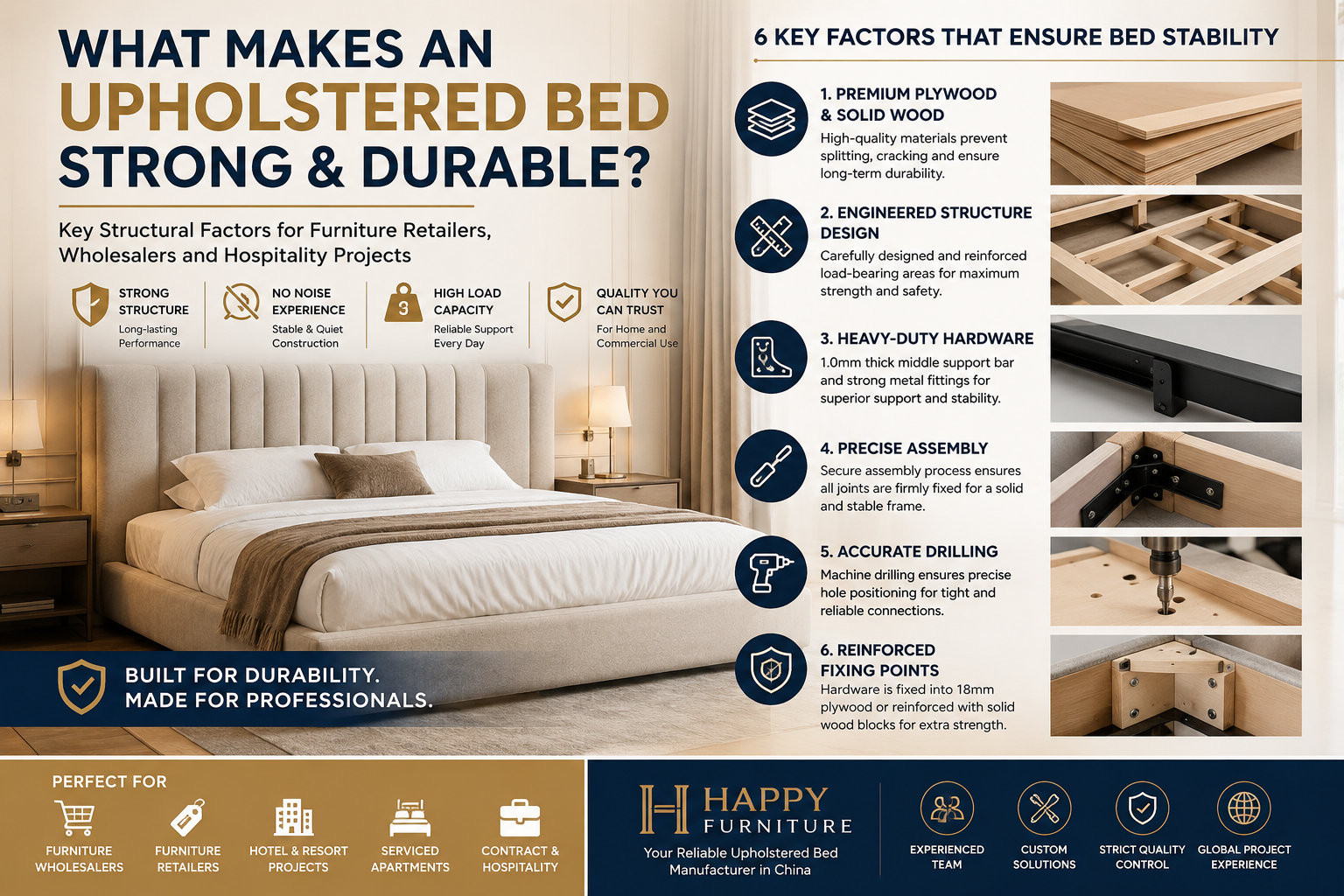
Why Product Structure Matters in Upholstered Beds | Manufacturer Guide
August 28, 2026
Why Product Structure Matters More Than Appearance for Upholstered Beds
What furniture wholesalers and retailers should check before choosing an upholstered bed manufacturer
When buying upholstered beds for a furniture business, appearance is usually the first thing people notice.
A beautiful headboard, premium-looking fabric, attractive stitching and a modern silhouette can make an 0ut for furniture wholesalers, retailers, importers and private-label brands, appearance is only one part of the product. The real quality of an upholstered bed is often hidden underneath the fabric.
A bed may look excellent in product photography, but if the internal frame, joints, support system, hardware or mattress support structure are poorly designed, problems can appear after the product reaches the end customer.
This is why product structure matters more than appearance when developing or sourcing upholstered beds for wholesale.
For buyers working with an upholstered bed manufacturer in China, understanding the structure behind the product can help reduce quality problems, returns and after-sales costs.
1. The Upholstered Bed Frame Is the Foundation of the Product
The internal frame is one of the most important components of an upholstered bed.
It supports the mattress, distributes weight and provides the foundation for the upholstered exterior.
A professionally engineered upholstered bed should consider:
Frame material and thickness
Reinforced corner construction
Side rail strength
Center support structure
Leg connection points
Mattress support
Load distribution
Hardware connections
A good frame should remain stable during everyday use rather than relying on upholstery or decorative elements to create the impression of strength.
For wholesalers and retailers, this is particularly important because a structural problem can result in:
Bed movement or instability
Squeaking or noise
Loose connections
Frame deformation
Customer complaints
Increased return rates
At Happy Furniture, product development covers the complete production process from wood cutting and frame construction to drilling, frame polishing, upholstery, packaging and container loading.
2. Strong Connections Are More Important Than Decorative Details
A beautiful upholstered bed can still fail if the connections between components are weak.
The connection points between:
Headboard and side rails
Side rails and footboard
Legs and frame
Center support and frame
Slats and supporting rails
must be properly engineered.
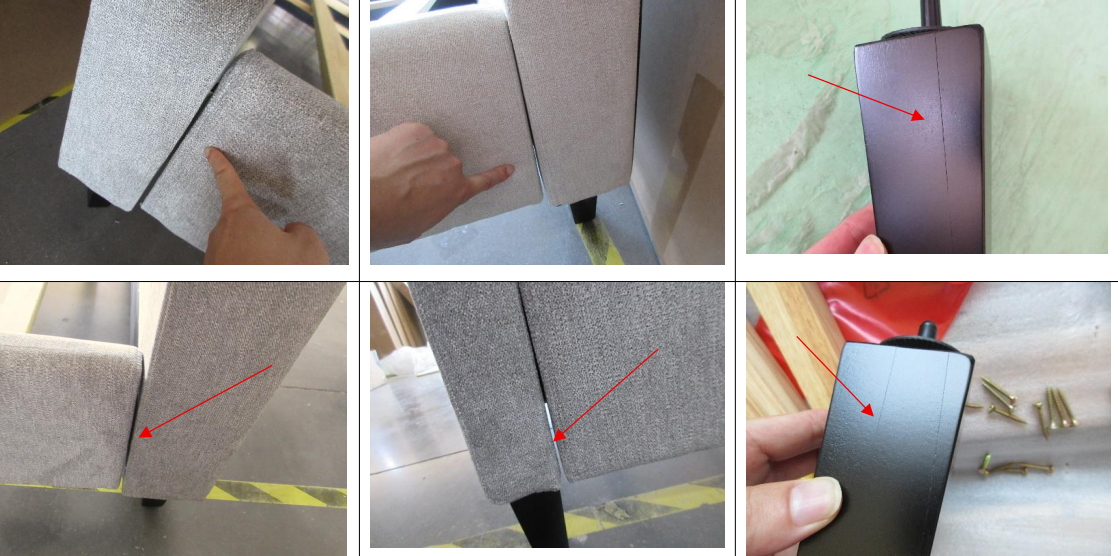
For example, a large upholstered headboard creates additional weight and leverage. If the connection between the headboard and the bed frame is not sufficiently reinforced, movement may develop over time.
This is one reason why an experienced OEM upholstered bed manufacturer should be involved during the product development stage rather than simply manufacturing according to a finished appearance.
The manufacturer should be able to review the design and identify potential structural risks before mass production begins.
Following are the example for the connection default which will lead the bed crack.
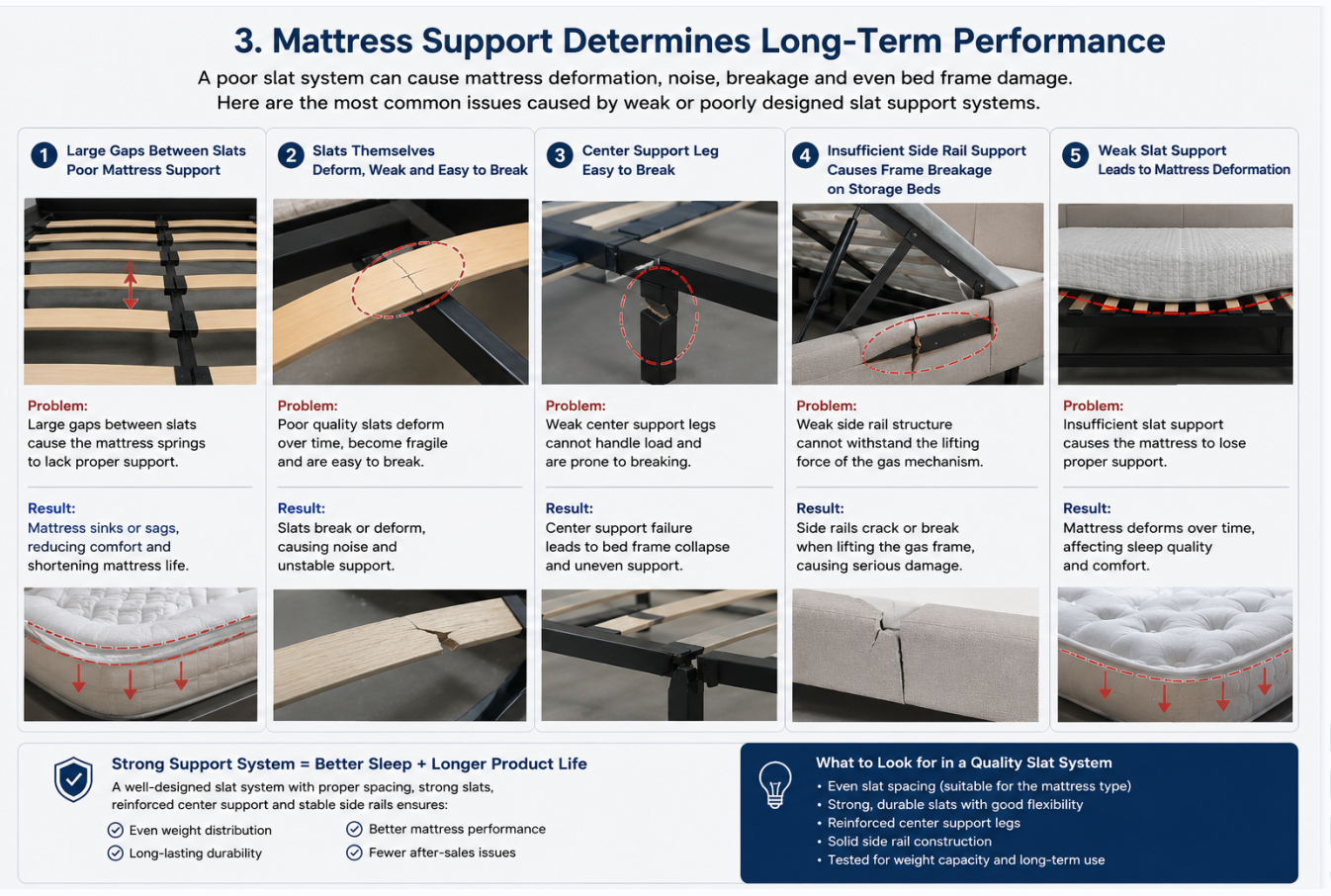
3. Mattress Support Determines Long-Term Performance
The mattress support system is another critical part of upholstered bed construction.
Depending on the design, a bed may use:
Wooden slats
Reinforced slats
Center support rails
Metal support systems
Platform structures
Hydraulic lift-up mechanisms
The support structure should be designed according to the intended mattress size and expected load.
For example, a Queen or King upholstered bed requires appropriate center support to prevent excessive movement or deflection.
A well-designed support system can also improve:
Mattress stability
Sleeping comfort
Structural durability
Weight distribution
Long-term product performance
Several Happy Furniture upholstered bed models use reinforced or durable slatted systems for mattress support.
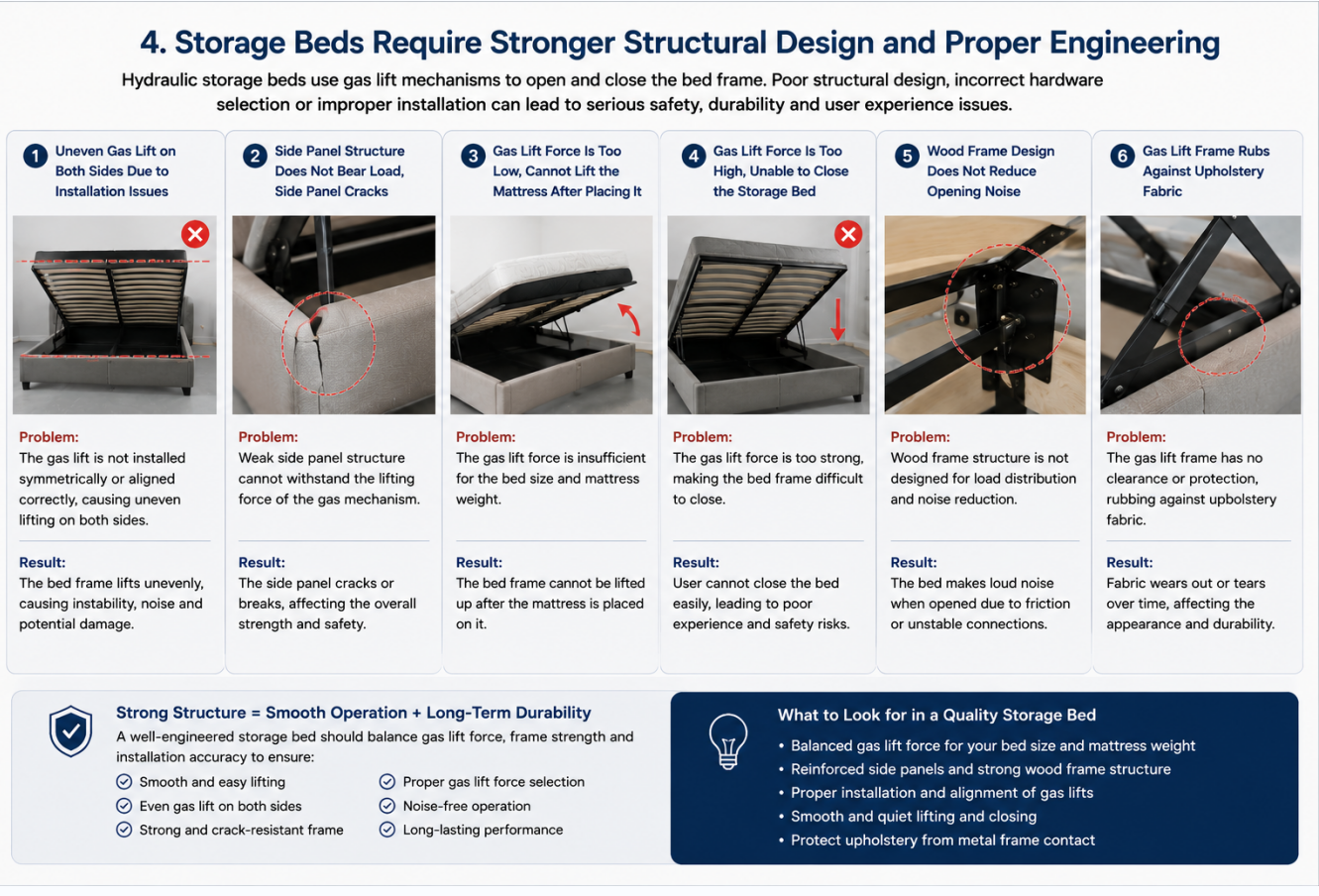
4. Storage Beds Require Even More Structural Engineering
For wholesalers looking for hydraulic storage beds, product structure becomes even more important.
A lift-up storage bed needs to handle the additional weight of:
Mattress
Bed platform
Storage frame
Metal lifting mechanism
User operation
The hydraulic mechanism must work together with the overall frame rather than being treated as an independent component.
A poorly engineered storage bed can create problems such as:
Difficult lifting
Platform instability
Uneven lifting
Excessive noise
Loose hardware
Hydraulic mechanism failure
Therefore, buyers should ask their upholstered bed supplier not only about the appearance of the storage bed but also about the complete lifting structure and hardware system.
Happy Furniture's product range includes hydraulic lift-up storage beds, including designs combining storage functionality with upholstered headboards and LED features.
5. Foam and Upholstery Cannot Compensate for a Weak Structure
One common mistake when evaluating upholstered furniture is focusing too heavily on the fabric and foam.
Fabric affects:
Appearance
Hand feel
Abrasion resistance
Color
Cleaning performance
Foam affects:
Comfort
Softness
Recovery
Perceived quality
But neither fabric nor foam can compensate for a poorly engineered internal frame.
Think of an upholstered bed as having two layers:
Visible layer:
Fabric + foam + stitching + decorative details
Structural layer:
Wood frame + joints + support system + hardware + mattress foundation
The visible layer sells the design.
The structural layer protects the product's long-term performance.
For a wholesale furniture business, both are necessary—but the structural layer is the foundation.
6. Good Design Should Balance Appearance and Manufacturability
A successful upholstered bed is not simply a beautiful drawing.
It needs to become a repeatable manufacturing product.
For furniture wholesalers and private-label brands, this means the manufacturer should be able to translate a design concept into a practical production structure.
Important considerations include:
Design
Headboard shape
Overall proportions
Upholstery style
Fabric selection
Stitching
Decorative details
Engineering
Frame construction
Hardware
Support system
Assembly method
Structural reinforcement
Manufacturing
Cutting accuracy
Drilling
Upholstery process
Sewing
Assembly
QC
Logistics
Knock-down structure
Carton dimensions
Protection
Container loading efficiency
This is particularly important for e-commerce furniture because packaging dimensions and assembly requirements can directly affect shipping costs and customer experience.
7. Packaging Should Be Considered During Product Development
A strong product that arrives damaged is still a failed product.
For international furniture buyers, the product structure and packaging structure should therefore be considered together.
A professional manufacturer should evaluate:
Carton dimensions
Corner protection
Upholstery protection
Hardware packaging
Component separation
Internal protection
Drop and transportation risks
Container loading efficiency
This is especially important when shipping upholstered beds from China to markets such as the UK, Europe, North America, Australia and the Middle East.
The product should be designed not only to look good in a showroom, but also to survive international transportation.
8. Why Experienced Upholstered Bed Manufacturers Make a Difference
For furniture buyers, working with an experienced manufacturer can reduce the gap between design concept and mass-production reality.
An experienced factory understands that different components affect each other.
For example:
Fabric → affects upholstery process
Foam → affects comfort and appearance
Frame → affects strength
Hardware → affects assembly and durability
Packaging → affects transportation
Product structure → affects all of the above
This is why choosing a factory based only on the lowest quotation can create problems later.
A lower initial price may become much more expensive if it results in:
High return rates
Replacement parts
Customer complaints
Rework
Shipping claims
Poor reviews
Lost customers
For wholesalers, the real objective should be total product value, not simply the lowest factory price.
9. What Should Furniture Buyers Ask an Upholstered Bed Supplier?
Before placing a bulk order, wholesalers and retailers should ask the manufacturer:
Product Structure
What material is used for the internal frame?
How are the corners reinforced?
How is the center support constructed?
What type of mattress support system is used?
Hardware
What type of connectors are used?
What hardware is used for storage beds?
How are the legs connected?
Are replacement hardware components available?
Materials
What foam density is used?
What fabric specifications are available?
What wood or board materials are used?
Can materials be customized?
Production
Does the factory manufacture the product in-house?
What is the production capacity?
How is QC performed?
Can the factory support OEM/ODM development?
Logistics
Is the bed designed for KD packing?
What are the carton dimensions?
How many units can fit into a 40HQ container?
How is the product protected during international transportation?
These questions can help buyers distinguish a real upholstered furniture manufacturer from a trading company that simply sells products from different factories.
10. Why Choose Happy Furniture for Upholstered Bed OEM & ODM?
Happy Furniture is an experienced upholstered furniture manufacturer in China, specializing in upholstered beds, sofas and sofa beds.
The company has more than 15 years of industry experience, a 15,000+ square meter workshop, more than 3,000 designs, and sales coverage across 60+ countries and regions.
The factory's production process covers key stages including:
R&D Design → Wood Cutting → Wood Frame → Wood Drilling → Frame Polishing → Fabric Cutting → Sewing → Foaming → Upholstery → Packaging → Storage → Container Loading
This integrated production process helps connect product design, structural engineering, manufacturing and quality control.
Happy Furniture also provides OEM and ODM customization for fabric, color, size and packaging, making it suitable for furniture wholesalers, retailers, e-commerce brands and hospitality projects.
Conclusion: Look Beyond the Fabric
When sourcing upholstered beds, appearance is important—but it should never be the only consideration.
A successful wholesale upholstered bed needs:
Good Design + Strong Structure + Quality Materials + Reliable Hardware + Professional Manufacturing + Safe Packaging
A beautiful bed attracts the customer.
A strong structure keeps the customer satisfied.
For furniture wholesalers, importers, retailers and private-label brands, this distinction can make a significant difference to long-term business performance.
If you are looking for an upholstered bed manufacturer in China for wholesale, OEM or ODM projects, Happy Furniture can help turn your design ideas into production-ready upholstered beds with customized materials, dimensions, upholstery and packaging.
Looking for a reliable upholstered bed supplier for your next collection?
Explore Happy Furniture's Upholstered Bed Collection
Learn More About Happy Furniture's Factory
Contact:
Email: happyfurniturecn@163.com
WhatsApp: +86 138 2528 6431